How Dental Implants Restore Bite Strength
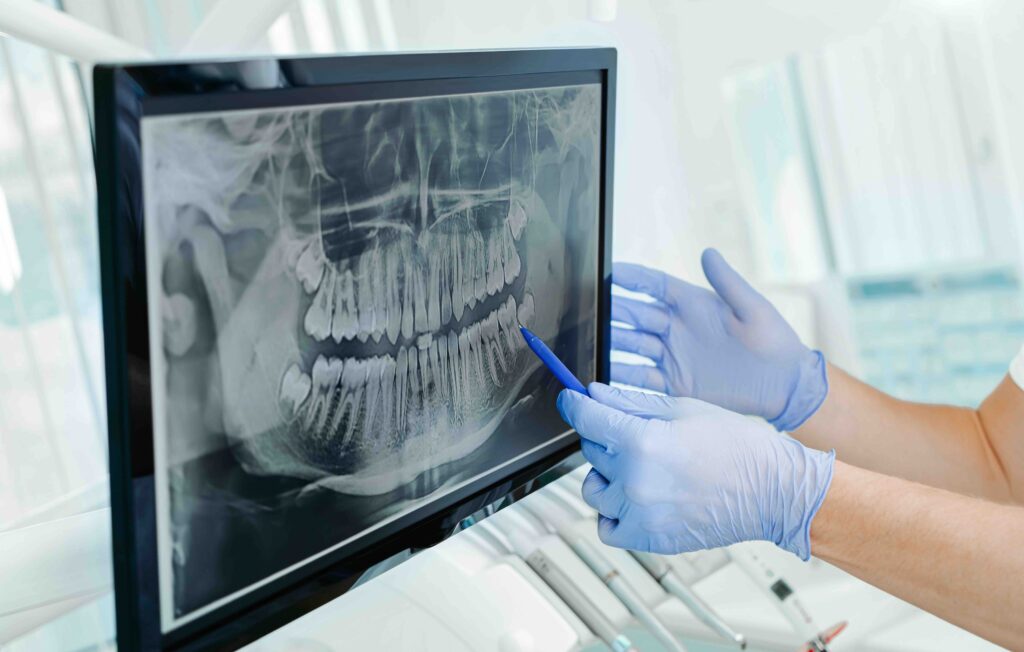
Losing a tooth changes more than a smile. It changes the way a person chews, the way the jaw absorbs force, and often the kinds of foods that feel safe to eat. Many people do not notice the full impact right away. They adapt, usually without realizing it. They start chewing on one side, cutting food into smaller pieces, skipping crusty bread, nuts, steak, apples, or anything that pushes back. Over time, that quiet compensation can affect comfort, nutrition, and confidence.
Dental Implants are often discussed as a cosmetic replacement, but their real value goes deeper. A well-planned implant restoration can bring back a surprising amount of bite strength, especially when compared with removable options or with leaving a gap untreated. That matters because chewing is not a minor function. It is a daily mechanical task that depends on bone, ligaments, muscles, joints, and teeth all working in balance.
The patients who appreciate implants most are often not the ones focused only on appearance. They are the ones who remember what it felt like to bite into food without thinking about it.
Bite strength is about force, stability, and confidence
When dentists talk about bite strength, they are referring to the force the jaws can generate and apply during chewing. That force is not identical across the mouth. Back teeth, especially molars, are built to handle much heavier loads than front teeth. The further back in the mouth you go, the more chewing force tends to increase. That is why losing a molar often changes eating habits more than losing a front tooth, even if the front tooth loss feels more emotionally distressing.
Natural teeth are anchored in bone by the periodontal ligament, a specialized structure that acts like a tiny shock absorber and sensory organ. It helps people sense pressure, texture, and overload. If a popcorn kernel is caught in just the wrong way, the ligament helps the body react before too much force is applied. That feedback is one reason natural teeth are so efficient.
When a tooth is missing, the system changes. The neighboring teeth may shift slightly over time. The opposing tooth can drift. Muscles adapt to avoid the area. More important, the jaw no longer has a stable structure in that exact location to accept chewing forces. Bite strength is not just about how hard someone can clench. It is about whether there is a dependable surface that can transmit force into the jaw in a controlled way.
That is the central reason implants can restore function so effectively. They create a new anchor where a natural root used to be.
What happens to chewing after tooth loss
A single missing tooth can create more disruption than many people expect. The effect depends on where the space is, how long it has been missing, whether the person clenches or grinds, and what condition the surrounding teeth are in.
A missing back tooth usually reduces chewing efficiency first. Food is harder to grind thoroughly. People may not describe this as weakness. They often say, “I just avoid that side,” or “I can still eat, but it takes longer.” That is functional loss, even if pain is absent.
Several patterns tend to appear after tooth loss:
- chewing shifts to the opposite side
- harder foods are avoided or modified
- neighboring teeth take extra load
- sore spots or jaw fatigue become more common
- denture wearers often report movement or pressure under force
These changes are not always dramatic at first. They accumulate. Someone may be managing well enough on softer foods, then notice a problem during a business dinner, a holiday meal, or after trying to return to foods they used to enjoy. I have heard variations of the same story many times: “I didn’t realize how much I was compensating until I didn’t have to anymore.”
Why conventional dentures often struggle with bite force
Traditional dentures can restore appearance and a basic level of function, and for many patients they remain a reasonable treatment. But removable prosthetics have limits when it comes to bite strength, especially lower dentures.
The reason is straightforward. A conventional denture sits on top of the gums and underlying bone rather than being fixed directly into the jaw. When a person bites down, the denture can shift, rock, or compress soft tissue. That movement reduces confidence and limits how much force feels comfortable to apply. Even if the denture is well made, the wearer often senses that pushing harder may cause slipping or soreness.
The lower jaw is usually more challenging than the upper. Upper dentures can often gain suction from the palate and broader surface area. Lower dentures sit on a narrower ridge, surrounded by a very active tongue and mobile muscles in the cheeks and floor of the mouth. Many lower denture wearers can technically chew, but their chewing efficiency is often far below what they had with natural teeth.
This is one reason implant-retained or implant-supported solutions are so significant. They reduce movement. Less movement means more stability. More stability usually means a patient can generate and tolerate greater chewing force.
How Dental Implants change the mechanics
A dental implant is placed into the jawbone and, after healing, supports a crown, bridge, or denture attachment. The critical biomechanical advantage is that the implant becomes integrated with bone. It functions as a fixed anchor rather than a pressure-bearing appliance resting on soft tissue.
That difference is not academic. It changes how force travels during chewing.
With an implant crown replacing a single tooth, the bite load is transferred through the implant into the surrounding bone. The restoration does not depend on suction, adhesives, or neighboring teeth for support. It stands independently. Patients often describe this as the tooth feeling “solid” or “part of the mouth,” even though it does not mimic natural tooth sensation exactly.
For someone who has worn a loose denture, the contrast can be dramatic. A lower denture stabilized by two implants, for example, is still removable, but it usually has far less lift and slide than a conventional lower denture. That reduction in movement often translates into better chewing force, improved comfort, and more willingness to eat fibrous or textured foods.
With fixed full-arch implant restorations, the gains can be even more noticeable. Because the teeth are attached to a rigid framework supported by implants, the patient often regains a much stronger, more predictable bite than they had with a loose removable prosthesis. The exact level varies case by case, but the improvement in function is often one of the most meaningful outcomes.
Restoring strength does not mean restoring everything identically
It is tempting to say implants restore bite strength back to normal. Sometimes they come close in practical terms, especially for single-tooth replacement in a healthy mouth. But a careful answer is more useful than a simple one.
Natural teeth and implants are not mechanically identical. Natural teeth have periodontal ligaments. Implants do not. That means implants lack the same cushioning and pressure feedback. They are extremely stable, but they respond to force differently. This is why bite adjustment matters so much in implant dentistry. A crown that is even slightly too heavy in contact can create overload over time, particularly in patients who clench or grind.
Still, from a functional perspective, implants often restore a level of bite strength that feels life changing to the patient. The key is not whether the implant behaves exactly like a natural root. The key is whether the person can chew comfortably, efficiently, and confidently again.
That distinction matters in clinical conversations. A patient may not care about the technical differences in tissue response. Dental Implants What they care about is whether they can eat salad, chicken, almonds, toast, or corn on the cob without fear. For many, the answer after proper implant treatment is yes, with some reasonable caution depending on the case.
The role of bone, and why timing matters
Bone is part of the bite-strength story. When a tooth is lost, the jawbone in that area no longer receives stimulation from the root. Over time, the ridge tends to shrink. This process can affect both appearance and function. If too much bone is lost, placing an implant may require grafting or a different restorative plan.
Patients often ask whether waiting a few years before getting an implant matters. Functionally and surgically, it often does. A longer delay can mean more bone loss, more drifting of nearby teeth, and a more complicated bite relationship. That does not mean delayed treatment is impossible. Many successful implants are placed years after extraction. It does mean the path back to strong chewing may become less direct.
In posterior areas, where chewing loads are highest, bone quality and implant positioning are especially important. A molar implant is expected to handle substantial force. Diameter, length, bone density, and the design of the crown all influence how well that load is managed. Good implant dentistry is not just about filling a gap. It is about rebuilding the missing part in a way that respects force.
Single implants versus bridges in terms of bite force
Both implants and bridges can restore a missing tooth, but they do so in different ways. A traditional bridge relies on adjacent teeth for support. That can work well in selected cases, especially when those teeth already need crowns. However, a bridge does not replace the root in the missing site. It spans over it.
A single implant restores the missing tooth without cutting down neighboring healthy teeth. In many cases, that preserves more natural structure and gives the replacement tooth its own support in the bone. From a force perspective, that independence can be beneficial, particularly in areas that bear high chewing loads.
There are trade-offs. An implant requires surgery, healing time, and adequate bone. A bridge may be faster in some situations. Cost, anatomy, gum health, and overall treatment goals all matter. But if the goal is to recreate a stable biting unit in the exact location of the missing tooth, implants offer a mechanical advantage that is hard to ignore.
Full-arch cases often reveal the biggest functional difference
The patients who most clearly feel the bite-strength benefit are often those moving from complete dentures to implant-supported teeth. A person with a loose lower denture may have spent years cutting food into tiny pieces, avoiding restaurants, and worrying that the denture will shift while speaking or chewing. Even a modest upgrade, such as two implants retaining a lower overdenture, can change daily life more than people expect.
I have seen patients test their new stability in small, personal ways. One person brought in a piece of crusty bread at a follow-up because she wanted to show she could chew it again. Another mentioned eating lettuce without the denture floating up. Those comments may sound ordinary, but they point to something clinically meaningful. Better anchorage allows stronger, more useful force application.
It is worth keeping expectations realistic. Not every patient with full-arch implant treatment will chew like they did at age twenty-five with untouched natural teeth. Longstanding muscle habits, wear patterns, dry mouth, and medical conditions all influence the result. But compared with conventional dentures, implant support usually gives a more stable platform for force, and stability is the foundation of strength.
What determines how much bite strength a patient actually regains
Implants can restore substantial function, but the outcome depends on more than just placing titanium into bone. Dental Implants Several practical variables shape the result:
- where the missing tooth is located
- the number and distribution of implants
- bone quality and healing
- the design and material of the restoration
- clenching, grinding, and overall bite pattern
A single implant in the premolar area is not the same as a full-arch fixed bridge in a heavy bruxer. A front tooth implant is rarely asked to handle the same crushing load as a molar. Likewise, an implant placed in dense lower jawbone may feel stable sooner than one in softer upper posterior bone, though healing decisions should always be individualized.
Occlusion, the way teeth contact each other, is one of the most underappreciated factors. An implant crown that is too high can create symptoms ranging from soreness to screw loosening to ceramic chipping. A well-adjusted bite spreads forces more predictably. In patients who grind, a night guard is often less about caution and more about preserving the investment.
The adaptation period is real
Even when an implant is perfectly placed and restored, the patient usually needs time to trust it. This is especially true for people who have gone months or years chewing around a missing area. Their muscles and habits have been trained to protect that side. Once the implant crown is in place, the body does not always switch immediately.
That adaptation period can be surprisingly emotional. Some patients take small test bites for a few weeks. Others overuse the new side because they are so excited to have it back. Neither response is unusual. Chewing is partly mechanical and partly behavioral.
The early guidance after restoration matters. Patients do best when they understand that implants are strong but not indestructible. Sticky candies, ice chewing, and using teeth as tools remain bad ideas. So does assuming that “fixed” means “maintenance free.” Strong function depends on healthy gums, a stable bite, and regular monitoring.
When implants do not fully restore bite strength
There are edge cases where implants improve function but do not bring someone to the level they hoped for. Severe bone loss, advanced gum disease history, uncontrolled diabetes, heavy smoking, long-term denture wear, parafunctional habits, or temporomandibular joint disorders can all influence outcomes.
A patient with a history of aggressive grinding may repeatedly overload restorations unless the bite is carefully managed. Someone with significant loss of jaw width may need grafting or narrower implants, which can affect restorative design. A patient who has worn dentures for decades may have reduced neuromuscular efficiency even after implant treatment. The hardware may be stable, but the muscles and habits still need to catch up.
This is where experience and judgment matter. The best treatment plan is not always the most extensive one. Sometimes two implants to stabilize a lower denture deliver more practical chewing improvement than a more ambitious fixed case that stretches anatomy, budget, or maintenance ability. Restoring bite strength is not just about maximum force. It is about usable force over years.
The maintenance side of bite performance
A successful implant is not a one-time event. If the surrounding tissues become inflamed, or if the prosthetic components wear or loosen, bite performance can decline. Food can start packing around the area. The patient may avoid chewing there again. A tiny change in comfort often becomes a big change in behavior.
Routine maintenance helps protect function. That includes professional checks of tissue health, implant stability, and bite contacts. It also includes daily home care that matches the type of restoration. Cleaning around a single implant crown is different from cleaning under a bridge or around a full-arch prosthesis. The exact tools vary, but the principle stays the same: if plaque accumulates and inflammation develops, the support system weakens.
This is especially important because implants can feel solid even when early problems are developing silently. Natural teeth may become sensitive or mobile in ways patients notice quickly. Implant complications are not always that obvious in the beginning. Maintenance is part of preserving bite strength, not separate from it.
What patients usually notice first
Clinically, improved force is important. Personally, what patients notice first is often something simpler. Meals become less tiring. They stop planning every bite. They stop searching for the “safe side.” They spend less mental energy on chewing.
That reduction in hesitation is one of the clearest signs that bite strength has returned in a meaningful way. A person does not need a force meter to know whether function is back. They know because eating feels normal again.
For some, the first sign is being able to bite into a sandwich without the front or side collapsing. For others, it is chewing meat evenly on both sides. For denture wearers, it may be the absence of lift, rub, or floating. These are practical markers of restored mechanical confidence.
The bigger picture
Dental Implants restore bite strength by replacing what tooth loss takes away at the root level: anchorage. That anchorage gives the mouth a stable point to receive and distribute chewing force. Whether the implant supports a single crown, stabilizes a denture, or carries a full-arch restoration, the principle is the same. Stability improves function, and function improves quality of life.
Not every case is simple. Bone loss, bite habits, medical history, and restoration design all shape the result. Implants do not duplicate natural teeth in every biological detail, and they do not eliminate the need for maintenance. But in the right case, they can restore strong, dependable chewing far better than leaving a space untreated and often far better than removable solutions alone.
The value of that restoration is easy to underestimate until it is lost. Bite strength is one of those quiet abilities that feels invisible right up to the moment it changes. When it comes back, people notice. Not in a technical way, but in the most ordinary places, lunch with friends, a crisp apple, a meal that no longer requires strategy. That is where the success of implant treatment becomes real.
Oaks Dental
5000 Parkway Calabasas Suite 308
Calabasas, CA 91302, United States
+1 818-431-2000
FAQ About Dental Implants
What is the downside of a dental implant?
Implants require surgery and a healing period that can last several months. Possible complications include infection, nerve or sinus injury, damage to nearby teeth and failure to bond with bone. Your dentist should assess your health, bone support and alternatives before recommending treatment.
What do dental implants typically cost?
There is no single price for every implant case. The number of teeth replaced, implant components, final restoration and any grafting or extractions affect the total. Request a written estimate covering every stage and confirm insurance benefits and out-of-pocket costs with the practice.
How long do tooth implants last?
An implant can provide long-term support and may last a lifetime with good oral hygiene and regular dental care, but this is not guaranteed. The crown or other restoration may need replacement sooner. Smoking, gum disease and some health conditions can reduce implant success.